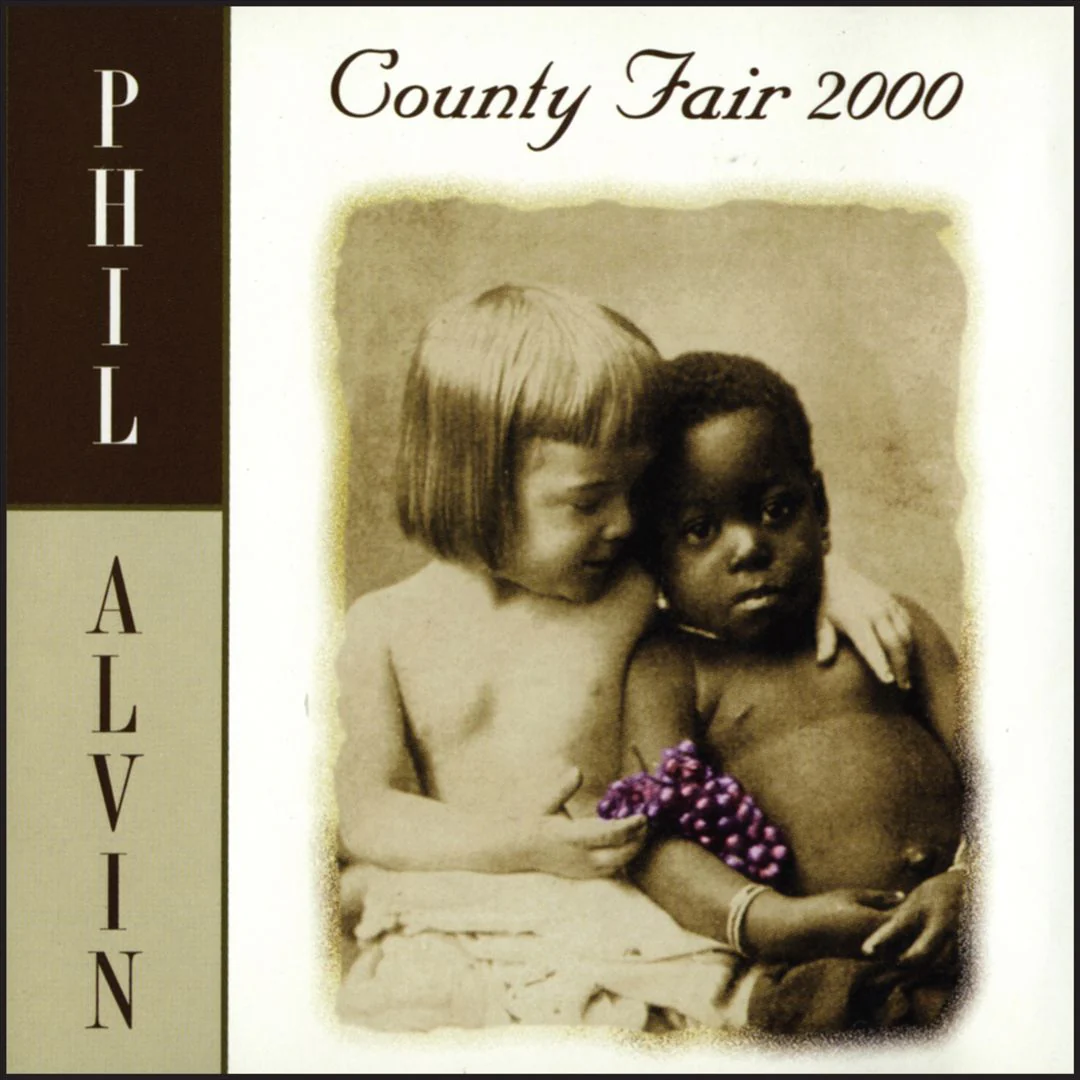
County Fair 2000
Personnel: Phil Alvin (vocals, guitar, banjo, harmonica, marksophone, piano); Fayard Nicholas, Eddie Baytos (vocals, percussion); Mary Franklin, Top Jimmy (vocals); Dave Myers (guitar, bass); Jerome Bowman (guitar, background vocals); Robert Lily, Gary Masi (guitar); John Bambridge (reeds); Elliot Caine, Ike "Diz" Williams (trumpet); Jim Maihack (trombone, tuba); Bob Ringwald (piano); Travis Dickerson (organ); Phil Thomas, Ken Sara (drums); The Blasters, Billy Boy Arnold, The Dirty Dozen Brass Band, Cesar Rosas.
Engineers include: Bruce Witkin, Ed Cody, Cesar Rosas.
Brothers Phil and Dave Alvin were the heart of California roots-rockers the Blasters. After songwriter/guitarist Dave's departure for a solo career, Phil kept the group alive, but mostly on a local performance level, not as a recording unit. He released his first solo album in 1986, but it took him eight years to make another.
Like its predecessor, COUNTY FAIR finds Phil Alvin backed by a shifting cast of characters, exploring an eclectic batch of American roots styles, from blues to country to R&B and rockabilly. On several songs, he's backed by the '90s version of the Blasters, but Alvin goes further afield in collaborations with the Dirty Dozen Brass Band and singer Mary Franklin. The solo efforts of each brother underline what the other brought to the Blasters; Dave's singing has never been described as mellifluous and songwriting is not really Phil's forte. The strongest cuts on COUNTY FAIR are those where Phil draws on his encyclopedic knowledge of American musical history by covering obscure blues and R&B gems; the most effective moments are those where he accompanies himself on guitar and breathes new life into such Americana relics as "That Thing" and "Callin' Corrine."
Engineers include: Bruce Witkin, Ed Cody, Cesar Rosas.
Brothers Phil and Dave Alvin were the heart of California roots-rockers the Blasters. After songwriter/guitarist Dave's departure for a solo career, Phil kept the group alive, but mostly on a local performance level, not as a recording unit. He released his first solo album in 1986, but it took him eight years to make another.
Like its predecessor, COUNTY FAIR finds Phil Alvin backed by a shifting cast of characters, exploring an eclectic batch of American roots styles, from blues to country to R&B and rockabilly. On several songs, he's backed by the '90s version of the Blasters, but Alvin goes further afield in collaborations with the Dirty Dozen Brass Band and singer Mary Franklin. The solo efforts of each brother underline what the other brought to the Blasters; Dave's singing has never been described as mellifluous and songwriting is not really Phil's forte. The strongest cuts on COUNTY FAIR are those where Phil draws on his encyclopedic knowledge of American musical history by covering obscure blues and R&B gems; the most effective moments are those where he accompanies himself on guitar and breathes new life into such Americana relics as "That Thing" and "Callin' Corrine."
$10.95
County Fair 2000—
$10.95
Description
Personnel: Phil Alvin (vocals, guitar, banjo, harmonica, marksophone, piano); Fayard Nicholas, Eddie Baytos (vocals, percussion); Mary Franklin, Top Jimmy (vocals); Dave Myers (guitar, bass); Jerome Bowman (guitar, background vocals); Robert Lily, Gary Masi (guitar); John Bambridge (reeds); Elliot Caine, Ike "Diz" Williams (trumpet); Jim Maihack (trombone, tuba); Bob Ringwald (piano); Travis Dickerson (organ); Phil Thomas, Ken Sara (drums); The Blasters, Billy Boy Arnold, The Dirty Dozen Brass Band, Cesar Rosas.
Engineers include: Bruce Witkin, Ed Cody, Cesar Rosas.
Brothers Phil and Dave Alvin were the heart of California roots-rockers the Blasters. After songwriter/guitarist Dave's departure for a solo career, Phil kept the group alive, but mostly on a local performance level, not as a recording unit. He released his first solo album in 1986, but it took him eight years to make another.
Like its predecessor, COUNTY FAIR finds Phil Alvin backed by a shifting cast of characters, exploring an eclectic batch of American roots styles, from blues to country to R&B and rockabilly. On several songs, he's backed by the '90s version of the Blasters, but Alvin goes further afield in collaborations with the Dirty Dozen Brass Band and singer Mary Franklin. The solo efforts of each brother underline what the other brought to the Blasters; Dave's singing has never been described as mellifluous and songwriting is not really Phil's forte. The strongest cuts on COUNTY FAIR are those where Phil draws on his encyclopedic knowledge of American musical history by covering obscure blues and R&B gems; the most effective moments are those where he accompanies himself on guitar and breathes new life into such Americana relics as "That Thing" and "Callin' Corrine."
Engineers include: Bruce Witkin, Ed Cody, Cesar Rosas.
Brothers Phil and Dave Alvin were the heart of California roots-rockers the Blasters. After songwriter/guitarist Dave's departure for a solo career, Phil kept the group alive, but mostly on a local performance level, not as a recording unit. He released his first solo album in 1986, but it took him eight years to make another.
Like its predecessor, COUNTY FAIR finds Phil Alvin backed by a shifting cast of characters, exploring an eclectic batch of American roots styles, from blues to country to R&B and rockabilly. On several songs, he's backed by the '90s version of the Blasters, but Alvin goes further afield in collaborations with the Dirty Dozen Brass Band and singer Mary Franklin. The solo efforts of each brother underline what the other brought to the Blasters; Dave's singing has never been described as mellifluous and songwriting is not really Phil's forte. The strongest cuts on COUNTY FAIR are those where Phil draws on his encyclopedic knowledge of American musical history by covering obscure blues and R&B gems; the most effective moments are those where he accompanies himself on guitar and breathes new life into such Americana relics as "That Thing" and "Callin' Corrine."